
By Holly Fearnbach, Marine Mammal Research Director
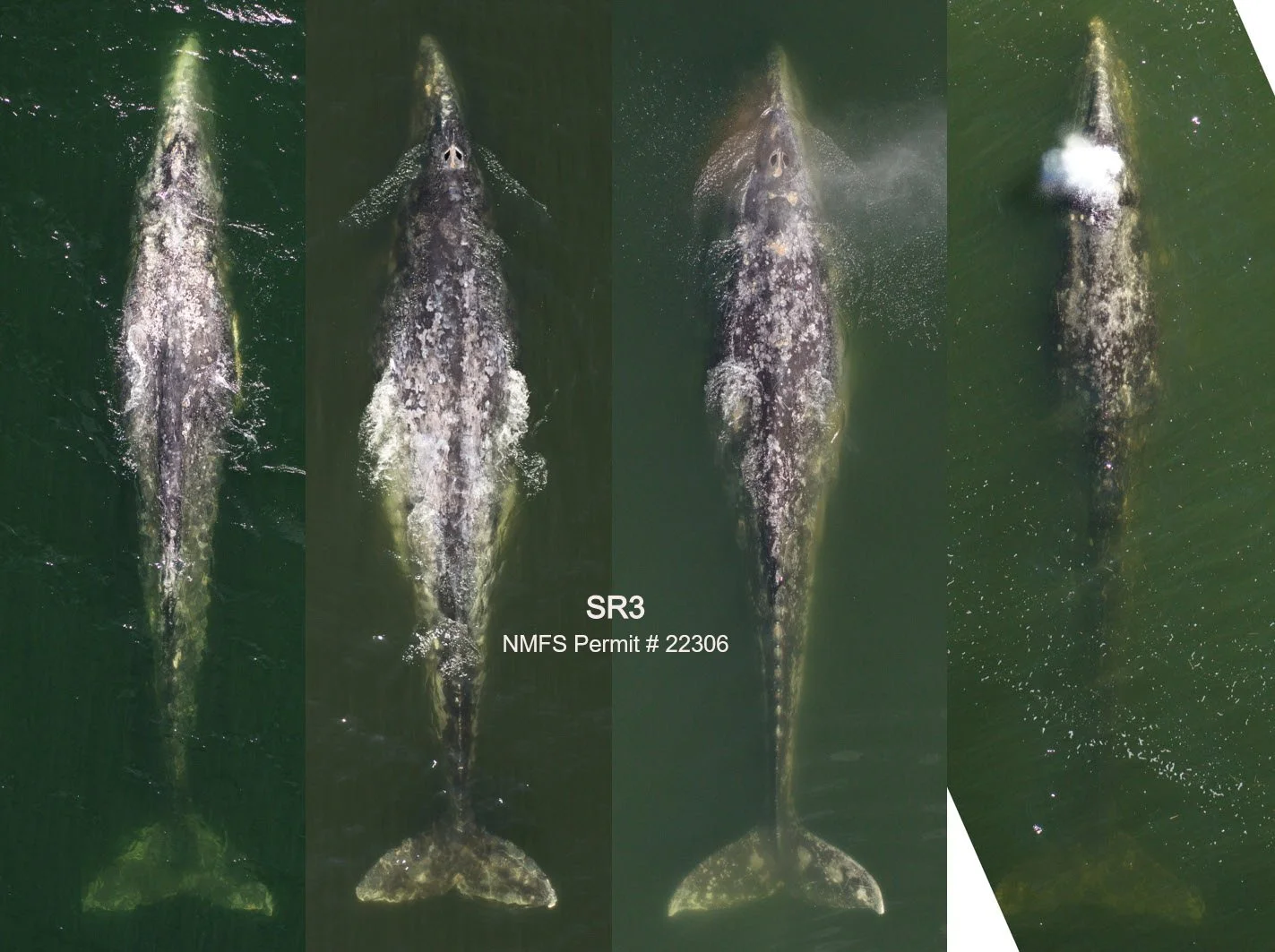
Aerial images of four gray whales photographed in Puget Sound in April 2026. Note the differences in body condition of the four whales, with the leanest whales on the far left and right. Differences in body condition are quantified by measuring widths along the profile of the whale. Images were collected non-invasively using an octocopter drone flown at >150ft over the whales under NMFS research permit # 22306.
SR3’s Dr. Holly Fearnbach, Alex Vanderzee, Kerri Danil, and Tom Cogan were joined by Mitch McCartney from the University of California at Davis for the first round of their health assessment work on the “Sounders” gray whales. This small aggregation of gray whales has an annual stopover in Puget Sound each spring to feed on ghost shrimp before continuing their migration to their Arctic feeding grounds. In previous years, this project has solely collected aerial photogrammetry images to assess individual body condition (nutritional status) and monitor how individual condition changes both within and between years. This year, the team is also collecting whale exhalate or “blow” samples to provide a more comprehensive health assessment.
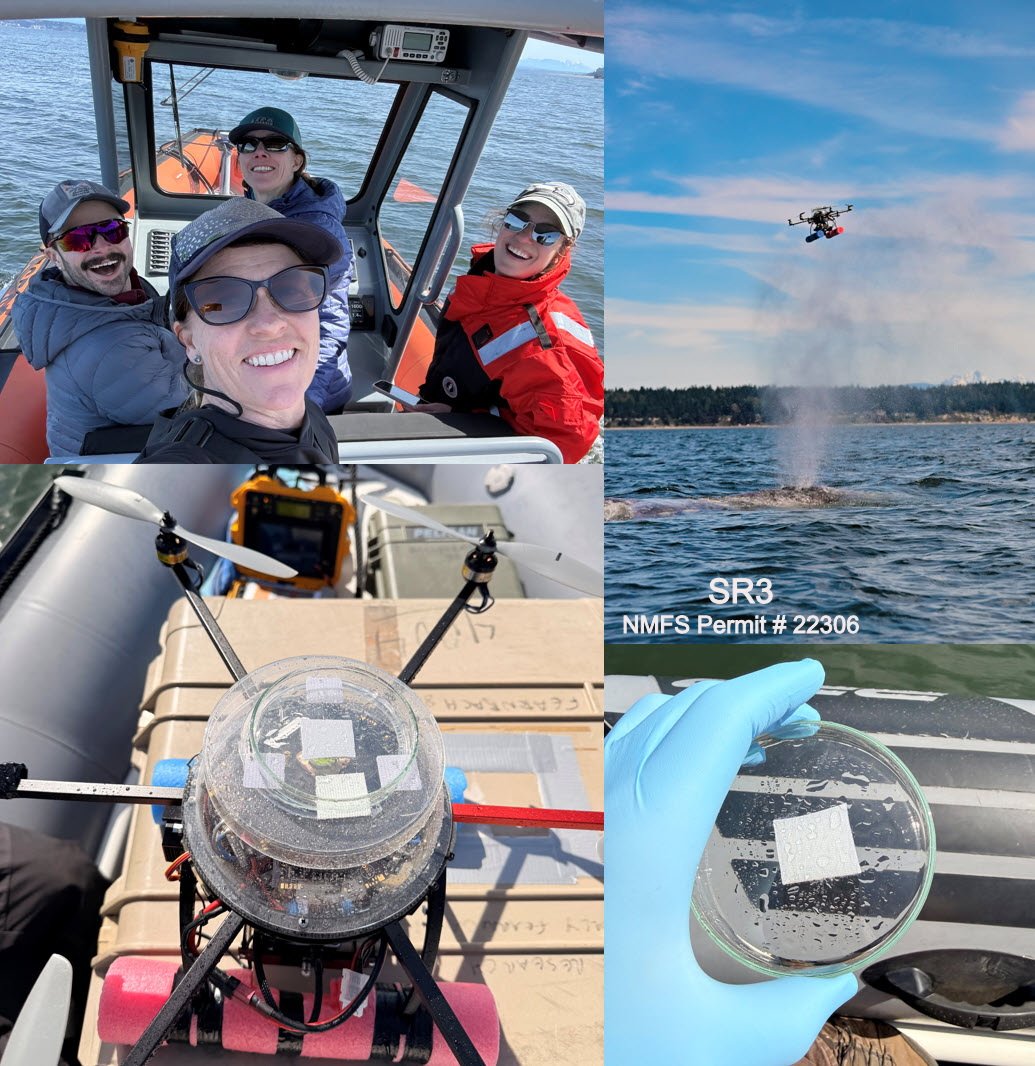
Top Left: Image showing the SR3 team heading out to find whales; Top right: Chimo, SR3’s hexacopter drone, flying through the plume of a gray whale blow; Bottom left: Chimo back on board after a successful blow sample collection; Bottom right: Mitch holding a sterile petri dish with a blow sample that will be analyzed for volatile organic compounds (VOCs) back at UC Davis. Research was conducted non-invasively under NMFS Research Permit # 22306.
Why is this work important?
An elevated number of gray whales have stranded along the west coast of North America since 2019, leading to the declaration of an Unusual Mortality Event (UME) that lasted between 2019-2023. The UME was declared over in 2024, but the number of dead stranded whales has continued to be high each year, with more than a dozen whales already stranded in WA in 2026. The eastern North Pacific gray whale population was estimated to have declined by more than 50% since 2016, dropping from a high of 27,000 whales to a low of ~ 13,000 in 2024/2025. The driver of this decline was suggested to be related to climate mediated changes in prey biomass and ice cover on their Arctic feeding grounds.
This is the seventh year of the study and the team had an incredibly successful field effort. A total of 16 whales were encountered, comprising 12 unique individuals. Photo-identification images of all of these whales were collected and matched to the long-term catalog maintained by collaborators at Cascadia Research Collective. Nine of these whales have been seen in previous years, but three of these whales are new to the Puget Sound in 2026. The team flew a remotely-controlled octocopter drone to non-invasively collect aerial photogrammetry images of eight of these whales, five of which have been imaged in previous years, and one that has been imaged every year since 2020. The team also flew a smaller hexacopter drone to non-invasively collect more than 25 whale blow exhalate samples from eleven of these whales. These samples will be analyzed to further assess individual health by describing respiratory microbiomes and volatile organic compounds (VOCs) present in the blow. These data will provide important baseline information on health, as well as allow for the diagnosis of disease and other underlying health conditions. This study will also increase our understanding of the relationship between these health metrics and body condition/nutritional status measured from aerial images. Results will be shared with management agencies to help inform conservation measures aimed at the Sounders and greater eastern North Pacific gray whale population during this period of continued population decline.