
A Preventable Tragedy in the Puget Sound
By Casey Mclean, Executive Director and Veterinary Nurse
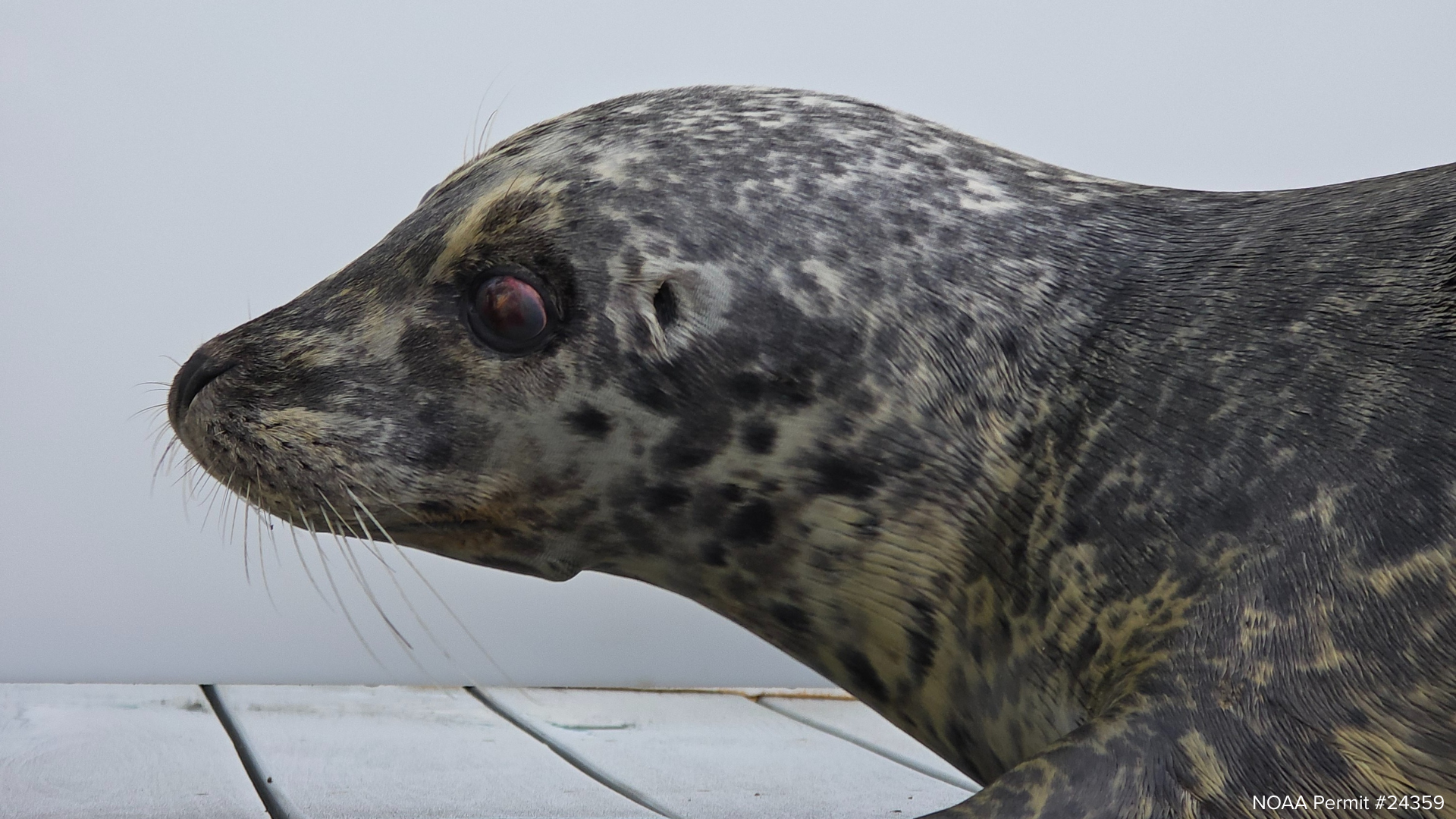
The injured side of Pool Noodle’s face, including his damaged eye and a lump in his jaw we confirmed was a bullet.
Content Warning: gun violence, animal death, surgical procedures
The most heartbreaking patients at SR3 are the ones that are harmed directly by human actions, especially when the harm is entirely preventable. This could be entanglement, pupnapping, or in the case of a juvenile harbor seal that came into care this fall, gunshot wounds.
Sadly, shootings are not uncommon among seals and sea lions. They are often linked to conflicts with local fisheries and the misguided belief that these animals are outcompeting them. Despite eating over sixty species of sea creatures, seals and sea lions have been scapegoated for the decline of salmon in the area, an issue far more accurately tied to complex causes such as habitat destruction, overfishing and warming rivers.
Most of the time, our team encounters these victims only after it’s too late, performing necropsies (animal autopsies) on carcasses that wash ashore. This patient, however, was the first live harbor seal with gunshot wounds to be admitted into our care.
Upon initial assessment, the damage to this left eye was evident. Radiographs (x-ray imaging) revealed even more devastating trauma: three bullets in his body. One was embedded in his hind flipper; the other two far more concerning ones were lodged in his face. One bullet shattered on impact, scattering shrapnel on that side of his head. In addition to the eye injury, his jaw had a hairline crack, but there were no other visible skull fractures and his blood tests were normal. We immediately put him on pain medications, antibiotics, and supportive care while closely monitoring his behavior to assess the full extent of the damage.
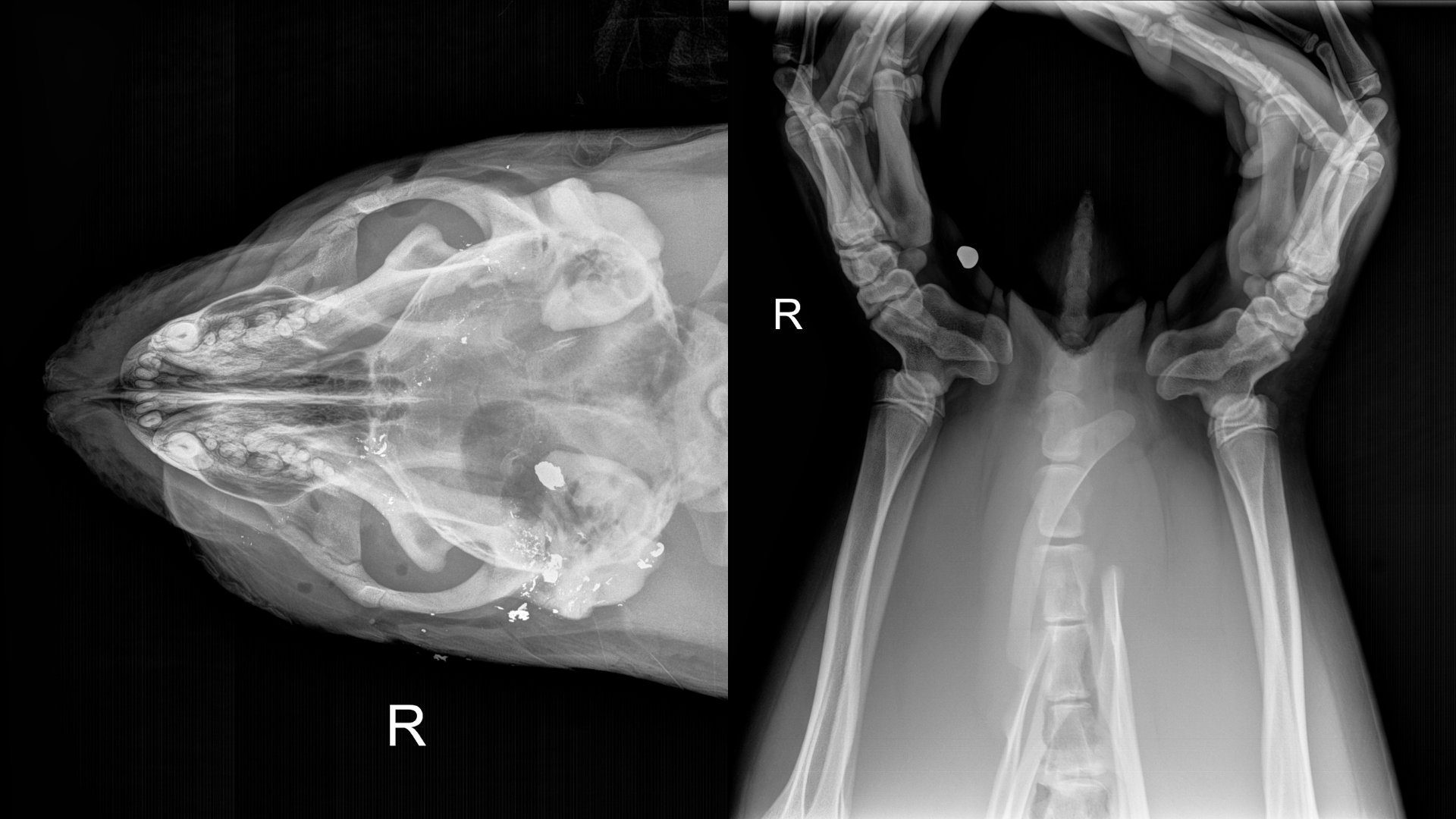
Radiographs of Pool Noodle’s head (left) and rear flippers (right). The bright white dots in each image are whole bullets or bullet fragments.
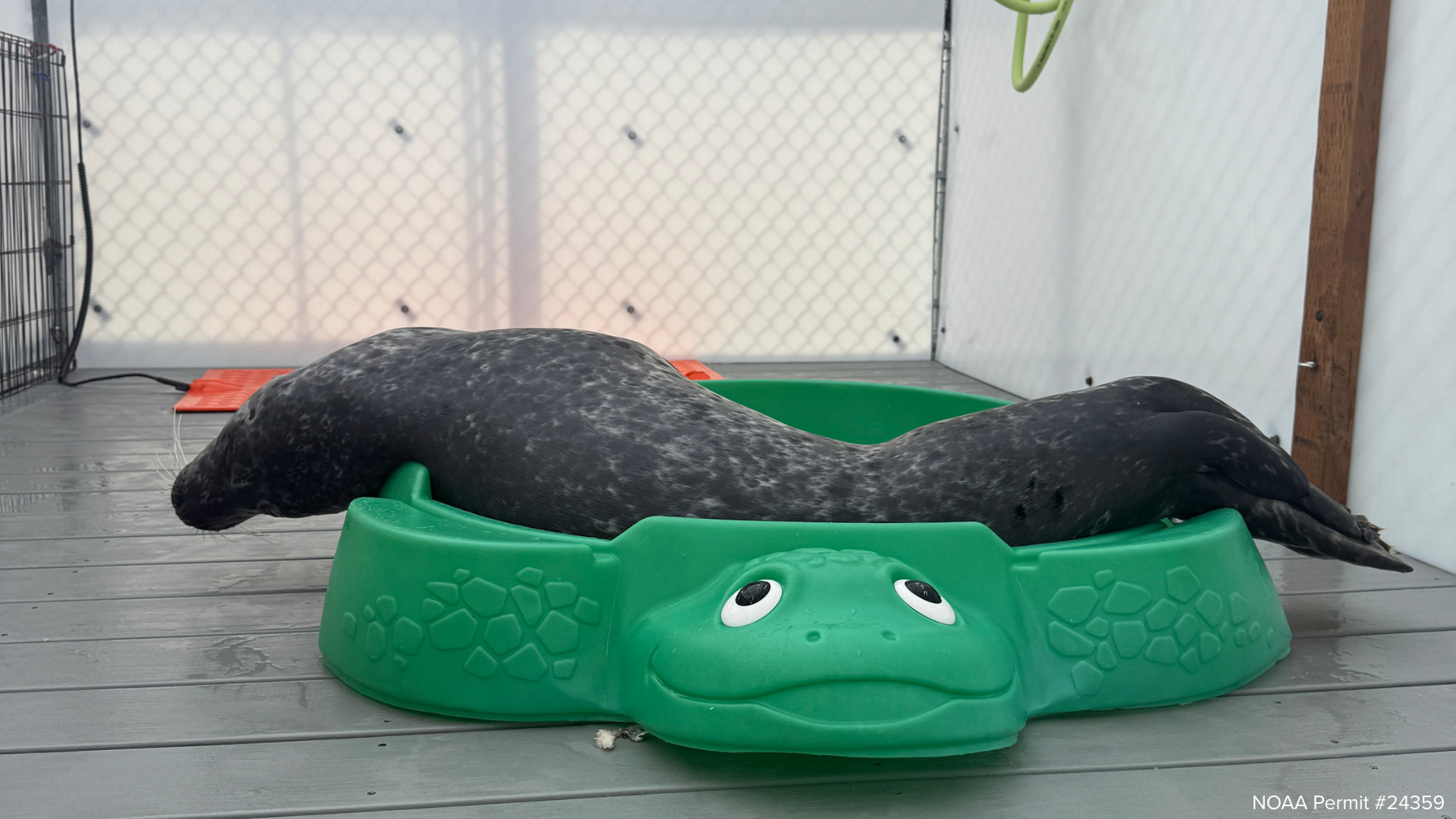
Pool Noodle resting in a shallow pool. Monitoring his interactions with water and food was one of the ways we assessed his brain trauma.
Despite his grave injuries, he fought to survive, defying the odds. He was alert, mobile, interacting with his environment and eating on his own. He earned the nickname Pool Noodle as he demonstrated his flexibility in a small feeding pool. As his condition stabilized, we turned our focus to long-term care. Removing his damaged eye became a priority to relieve his pain and reduce the risk of infection.
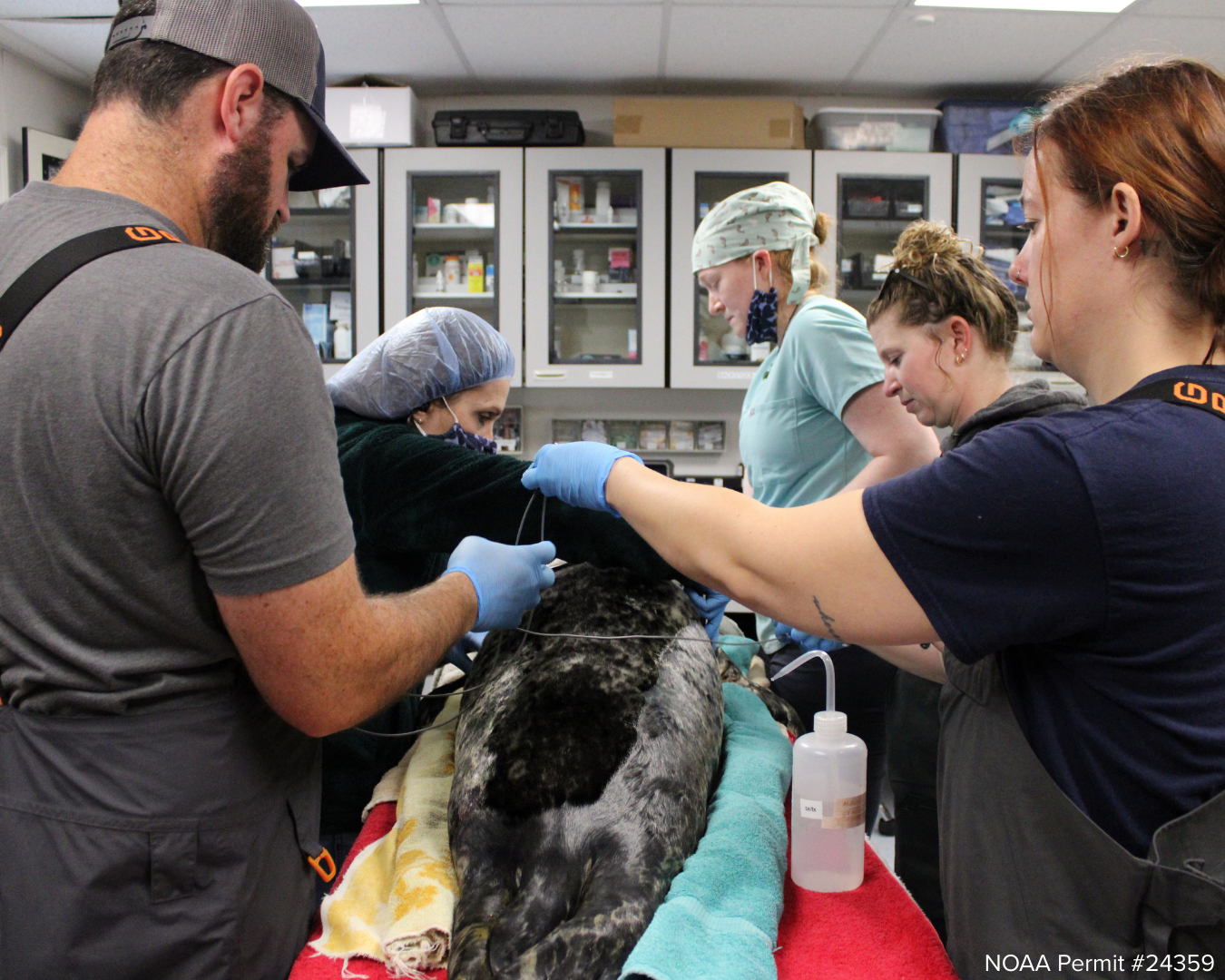
Pool Noodle getting prepped for surgery to remove his damaged eye.
Two weeks into his care, we noticed a sudden decline. Concerned his injured eye was becoming infected, we moved up his surgery and successfully removed the eye along with several bullets and fragments that we could easily access. His welfare and quality of life were paramount in our decision making, and we have successfully released one-eyed patients back into the wild. We were hopeful that Pool Noodle could be one of them.
He rallied the day after surgery and was active and eating again. But the improvement was short lived. His condition declined over the weekend and despite doing everything we could do to keep him comfortable and give him the best chance of survival, he passed away.
During his necropsy, our veterinary pathologist discovered the cause of his sudden decline: a bullet had lodged in his brain tissue and led to a serious infection. We consulted with a specialized marine mammal radiologist at the time of intake, who confirmed that there were no visible skull fractures on his radiographs. Given the extent of improvement he displayed, the severity of the injury was shocking. It demonstrates how resilient these animals can be up until the moment their injuries overwhelm them.
Pool Noodle’s story, while ending on a sad note, does not end without purpose. His injuries provide a stark example of how misunderstandings about the threats marine ecosystems face can lead to harmful actions, and of the profound impact humans have on the wildlife that share our waters. We are committed to making sure Pool Noodle’s story inspires compassion, education, and a deeper commitment to coexistence, and hope that in the coming years, it can highlight people’s capacity to change.