
By Casey Mclean, Executive Director and Veterinary Nurse
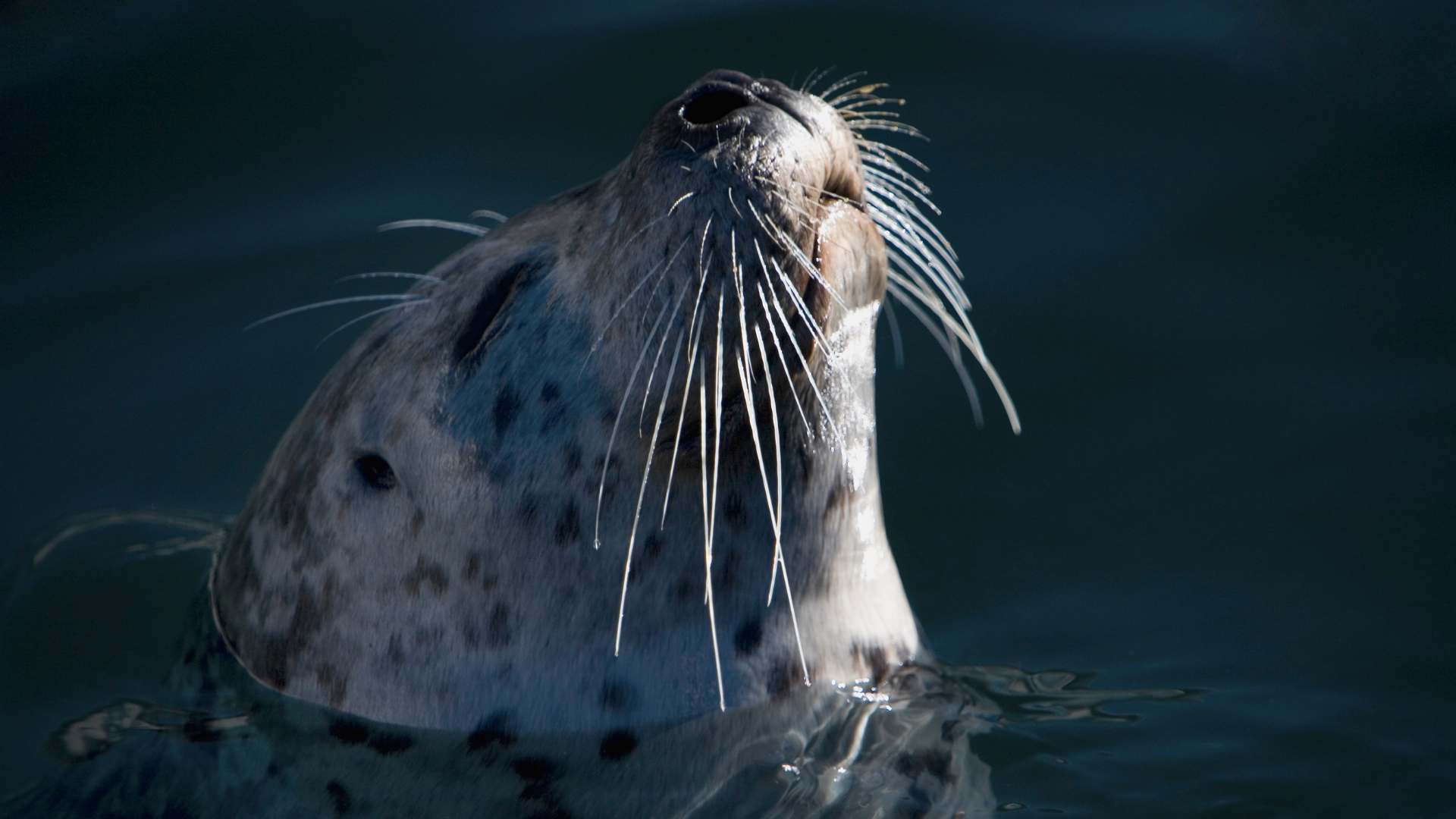
A harbor seal resting at the surface of the ocean.
Salmon are an integral part of the Pacific Northwest ecosystem. From the environment and food web, to culture and economy, salmon are necessary. They are also endangered, and seals and sea lions (together called pinnipeds) get blamed for their decline. Yet they are just two of the many animals, humans included, that eat salmon. Below, we address and correct four common myths about the connections between salmon and their flippered predators. Though they are just the tip of the iceberg, these myths are prevalent in misinformation about how the species intertwine.
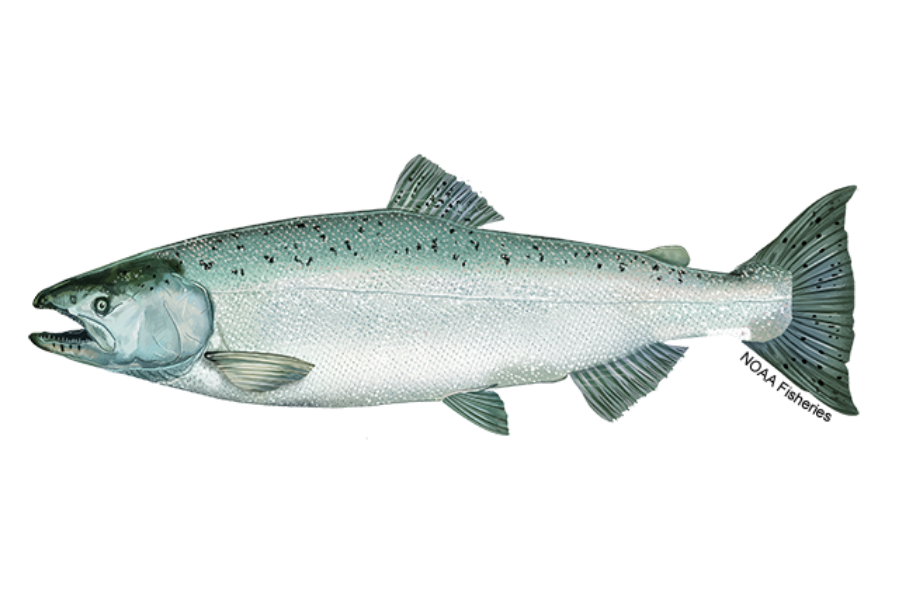
A Chinook salmon, one of the iconic salmon species in the Pacific Northwest. Credit: NOAA
Myth #1: Seals and sea lions eat all the salmon
This myth stems from the visibility of seals and sea lions eating salmon hindered by dams and other infrastructure during their journeys upriver to their spawning grounds. When salmon congregate, it offers an easy meal for dozens of their predators, who will eat the food that takes the least amount of energy to catch. 43 different species have been seen grouping up around salmon congregations (1), pinnipeds being just three of those species. Yet pinnipeds’ impact on salmon populations are miniscule compared to the impact of humans; sea lions only eat 0.28% of the Chinook salmon returning to Bonneville Dam on the Columbia River in the fall, while humans take 37.4% (2).
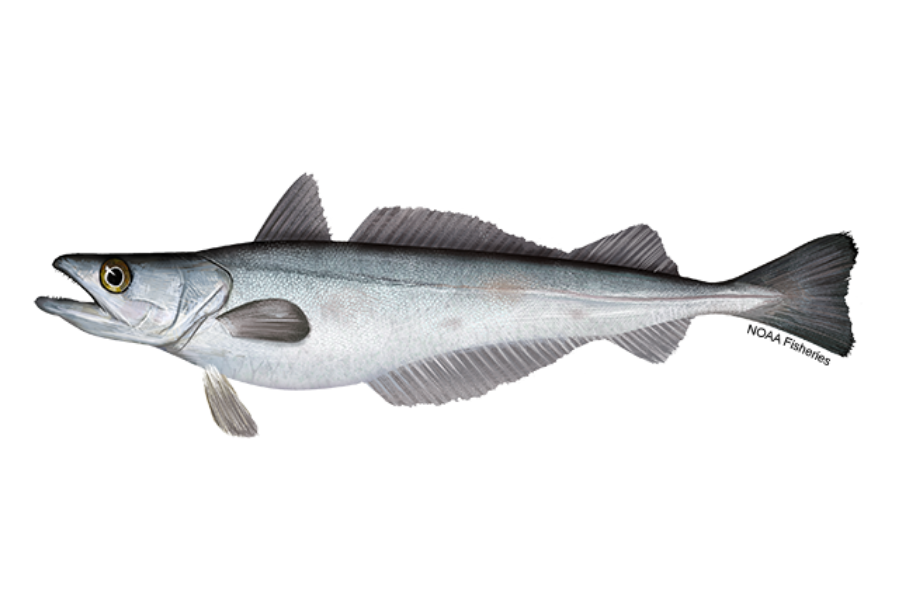
A Pacific hake, also known as Pacific whiting. Credit: NOAA
Local pinnipeds are also opportunistic eaters that will consume dozens of other species. For harbor seals, salmon is only about 5% of their diet (3). In contrast, Pacific hake is a staple of harbor seal diets and is also a salmon predator. When scientists looked at the food web around salmon, they found that changing sea lion populations might only affect salmon populations by a couple percent. But changing hake populations? It could affect Chinook and coho salmon by 25% (4). This means that removing hake’s predators (like harbor seals) could negatively impact salmon much more than any benefit that would come from removing the seals and sea lions themselves.
Fact #1: Seals and sea lions are not the main predators of salmon (humans are).
Myth #2: Seal and sea lion populations are exploding
Harbor seals in Washington belong to multiple genetically distinct groups, with one on the outer coast and three in Washington’s inland waters (5). For the inland animals, rather than population growth, there was actually a decline from 2003 to 2018 of over 5% per year (6). California sea lion populations haven’t changed much since 2008 when they finally recovered from hunting and environmental pollutants like DDT. Since 2008, their numbers have slightly fluctuated up and down based on environmental pressures, and they are at risk for significant decline if our oceans continue to warm (7, 8).
What has changed is their visibility in the environment as they seek different food sources or spots to rest. This visibility has already led to lethal removal of sea lions at Bonneville Dam on the Columbia River, a program that has been happening since 2008 and yet has not led to population level salmon recovery.
Fact #2: Populations haven’t grown in almost two decades. They are not exploding, we’re just paying more attention.
Myth #3: Seals and sea lions don’t have predators, so we need to control them
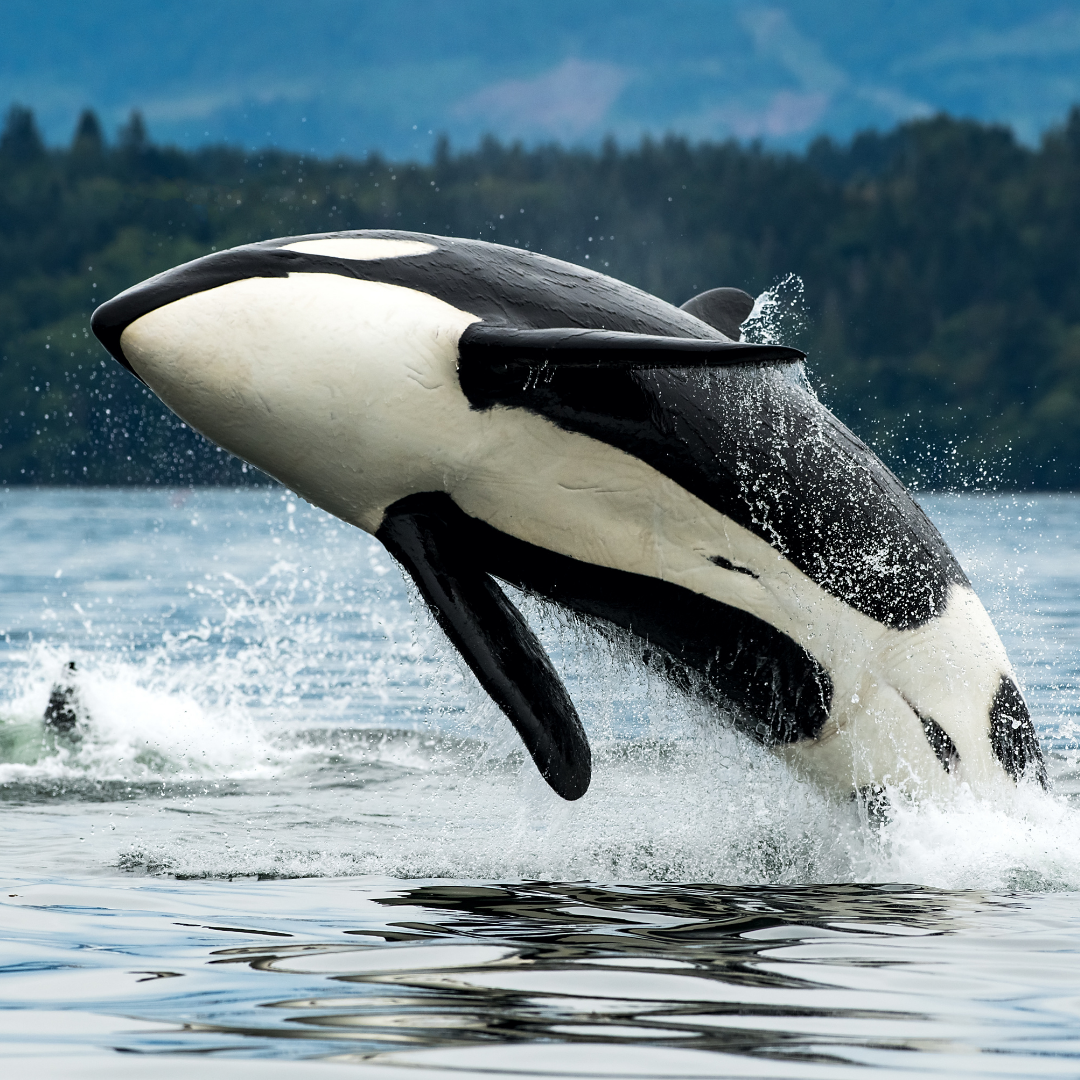
A Bigg’s killer whale in the Salish Sea. These whales eat seals, sea lions, and harbor porpoise.
Biggs killer whales eat seals, sea lions and harbor porpoises, and minimum estimates suggest that these natural predators consume at least 1,000 seals each year, or more than 2% of the harbor seal population (9). And this is a killer whale whose population is both increasing and becoming more prevalent in the Salish Sea. Biggs killer whales were even seen in the Ballard Locks in mid-August, a Seattle location where harbor seals and sea lions congregate because of a salmon bottleneck.
Pinnipeds are also harmed by human activity. Between 2019-2023, 1,800 seals and sea lions were killed by humans or human-made equipment, and those were just the animals that were found. While many of these deaths are directly related to fishing and fishing gear, 255 of the animals were shot (illegally) or lethally removed (legally at certain locations) (10).
Fact #3: Humans are already harming many seals and sea lions even without statewide population control, and their natural predators are killer whales.
Myth #4: California sea lions are invasive
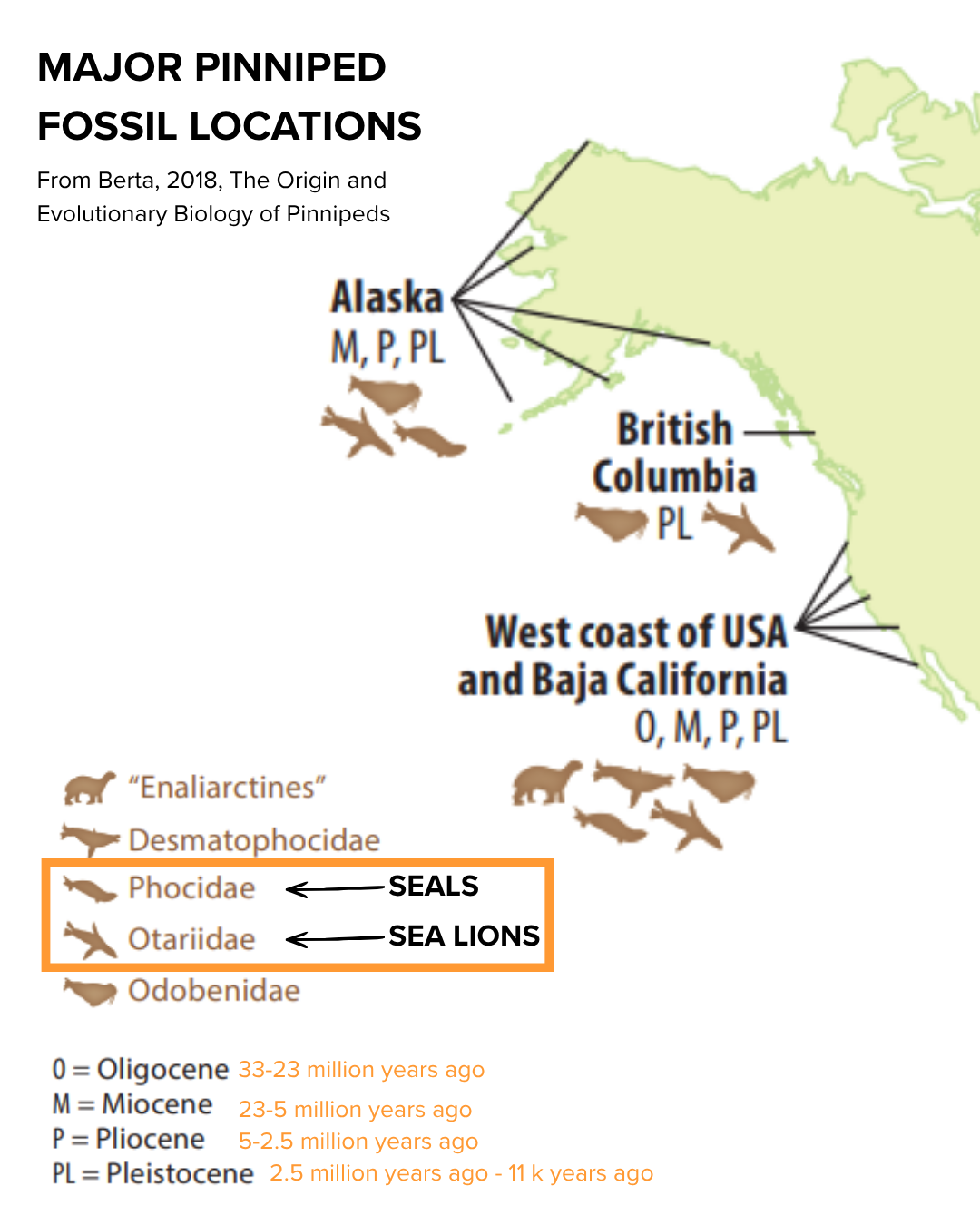
A map of the North American West Coast, showing where different pinniped fossils have been discovered (11).
California sea lions get their name from their breeding grounds in California, but their normal range reaches all the way up to British Columbia. Sea lion fossils from the last Ice Age have been found in the Pacific Northwest (11), and fossils from their 20 million year old relatives have been found along the Columbia River (12). 15-20 million years ago is also when salmon were evolving in the area (13), meaning sea lions and salmon evolved together.
In more recent history, sea lions and harbor seals have been documented by people in the Columbia River throughout the past several centuries, both through observations and the archeological record (14, 15).
Fact #4: Sea lions are as much a part of Washington natural history as salmon.
What should be done to recover salmon populations?
Salmon are struggling in their current environment. Pollution, warming waters, ocean overfishing, and infrastructure are all causing harm. But declining salmon populations are not just a current issue: salmon have been struggling since the 1800’s, and were even listed as an endangered species over 30 years ago in 1992. Throughout this time, there have been periods with fewer pinnipeds, yet salmon did not recover. In fact, some of the best salmon fishing happened after marine mammals were legally protected (16). So what are the main threats to salmon and what can be done?
Halt salmon overfishing and overproduction: 60% of Chinook are harvested in Alaska and British Columbia before they are able to return to the Puget Sound (17, 18). Pink salmon are also overproduced in fish farms, which then tips the food web and leaves insufficient food for Chinook (19). This impact can be felt all the way up to Southern Resident killer whales, which suffer in response to pink salmon life cycles (19, 20, 21).
Increase habitat restoration and access: Almost half of the Columbia River spawning habitat for salmon and steelhead (a salmon relative) is inaccessible because of dams (22). And for these fish, negative effects of habitat loss are also combined with climate change. Scientists have found that climate change is much more of a threat than natural predators for Olympic Peninsula steelhead (23). In order to mitigate the effects of something as overarching as climate change, we need to make sure that salmon and steelhead have a shaded, healthy, and accessible habitat.
Invest in technology: If management of seals and sea lions is required around infrastructure like the Columbia River Dam and the Ballard Locks, we should focus on technological solutions. Current or proposed lethal management funds can instead be invested in sound technology (24) to dissuade pinnipeds from hunting in those locations. This tech has already shown promising results.
We do not have to choose between salmon and seals.
Removing top predators from the environment is never a long term viable solution. Humans have tried this before with other animals, from wolves to bears to beavers, and it only proves to be a costly mistake when the scales tip and we have to restore the ecosystem. With salmon, rather than focusing on killing two of their many natural predators, policy and funding should go toward real solutions such as habitat restoration and technology.
Sources
Cederholm, J.C., et al. 2000. Pacific Salmon and Wildlife - Ecological Contexts, Relationships, and Implications for Management 2nd Edition. WDFW. https://wdfw.wa.gov/publications/00063
Data compiled by Washington Wildlife First from: WDFW. 2020, 2021, 2022, 2023, 2024. Joint Staff Reports: Stock Status and Fisheries for Fall Chinook Salmon, Coho Salmon, Chum Salmon, Summer Steelhead and White Sturgeon. https://wdfw.wa.gov/fishing/management/columbia-river/compact/other-information; Fish Passage Operations and Maintenance Pinniped Task Group. 2020, 2021, 2022, 2023, 2024. Army Corps of Engineers. https://public.crohms.org/tmt/documents/FPOM/2010/Task%20Groups/Task%20Group%20Pinnipeds/
Dunagan, C. 2026. Congress debates lethal removal of seals and sea lions in Puget Sound. Encyclopedia of Puget Sound, Salish Sea Currents Magazine. https://www.eopugetsound.org/article/congress-debates-lethal-removal-seals-and-sea-lions-puget-sound
Wells, B. K., et al. 2025. When, where, and why salmon become vulnerable to predation. ICES Journal of Marine Science, 82(9). https://doi.org/10.1093/icesjms/fsaf162
NOAA Fisheries. 2014. Harbor Seal (Phoca vitulina richardii): Washington Inland Waters Stocks: (Hood Canal, Southern Puget Sound, Washington Northern Inland Waters). https://media.fisheries.noaa.gov/dam-migration/po2013sehr-wain_508.pdf
Pearson, S. 2018. WDFW. Personal communication.
Laake, J.L., et al. 2018. Population growth and status of California sea lions. The Journal of Wildlife Management, 82(3): 583–595. https://doi.org/10.1002/jwmg.21405
Alaska Fisheries Science Center. 2018. California sea lion population rebounded to new highs. NOAA Fisheries. https://www.fisheries.noaa.gov/feature-story/california-sea-lion-population-rebounded-new-highs
Shields, M.W., et al. 2018. Increased presence of mammal-eating killer whales in the Salish Sea with implications for predator-prey dynamics. PeerJ, 6: e6062. https://doi.org/10.7717/peerj.6062
Carretta, J. V., et al. 2025. Sources of Human-Related Injury and Mortality for U.S. Pacific West Coast Marine Mammal Stock Assessments, 2019–2023. U.S. Department of Commerce, NOAA Technical Memorandum NMFS-SWFSC-728. https://doi.org/10.25923/sxy3-0n21
Berta, A., Churchill, M., Boessenecker, R.W. 2018. The Origin and Evolutionary Biology of Pinnipeds: Seals, Sea Lions, and Walruses. Annual Review of Earth and Planetary Sciences. 46:203–28. https://doi.org/10.1146/annurev-earth-082517-010009
Los Angeles County Museum. 1979. Desmatophoca brachycephala skull discovered in Knappton, WA by Jim and Gail Goedert.
Waples, R.S., Pess, G.R., Beechie, T. 2008. Evolutionary history of Pacific salmon in dynamic environments. Evolutionary Applications. 2008 May;1(2):189–206. doi: 10.1111/j.1752-4571.2008.00023.x
Lyman, R. L, et al. 2002. Prehistoric Occurrence of Pinnipeds in the Lower Columbia River. Northwestern Naturalist, 83(1): 1–6. https://www.jstor.org/stable/3536507
Walker, D. E. 2015. Seals and Sea Lions in the Columbia River: An Evaluation and Summary of Research. https://critfc.org/wp-content/uploads/2021/08/WalkerCRITFCReport2015.pdf
Cooper, R., Johnson, T.H. 1992. Trends in steelhead (Oncorhynchus mykiss) abundance in Washington and along the Pacific Coast of North America. Washington Department of Wildlife, Fisheries Management Division. Report No. 92-20.
Wild Fish Conservancy. 2026. While Orcas and Salmon Declined, Ocean Harvests of Puget Sound Chinook Were Significantly Underestimated for Decades. https://wildfishconservancy.org/while-orcas-and-salmon-declined-ocean-harvests-of-puget-sound-chinook-were-significantly-underestimated-for-decades/
Let Our Salmon Come Home: https://letoursalmoncomehome.org/
Ruggerone, G. T., et al. 2023. From diatoms to killer whales: Impacts of pink salmon on North Pacific ecosystems. Marine Ecology Progress Series, 719, 1–40. https://doi.org/10.3354/meps14402
Ruggerone, G. T., et al. 2019. Unprecedented biennial pattern of birth and mortality in an endangered apex predator, the southern resident killer whale, in the eastern North Pacific Ocean. Marine Ecology Progress Series, 608, 291–296. https://doi.org/10.3354/meps12822
Ruggerone, G. T., et al. 2025. Long-term biennial patterns in Puget Sound Chinook salmon and Southern Resident killer whales: The role of pink salmon and implications for ecosystem management. Canadian Journal of Fisheries and Aquatic Sciences. https://doi.org/10.1139/cjfas-2024-0262
Dams: Impacts on Salmon and Steelhead. 2026. Columbia River History Project, Northwest Power and Conservation Council. https://www.nwcouncil.org/reports/columbia-river-history/damsimpacts/
Barnas, K., Boughton, D. A, Brenkman, S. 2024. Biological Status of the Olympic Peninsula Steelhead Distinct Population Segment: Report of the Status Review Team. U.S. Department of Commerce, NOAA Technical Memorandum NMFS-NWFSC-198. https://doi.org/10.25923/tnxh-7j96
GenusWave. 2026. Targeted Acoustic Startle Technology (TAST). https://genuswave.com/