
An incredibly successful start to the 2026 Antarctic season!
By Holly Fearnbach, Marine Mammal Research Director
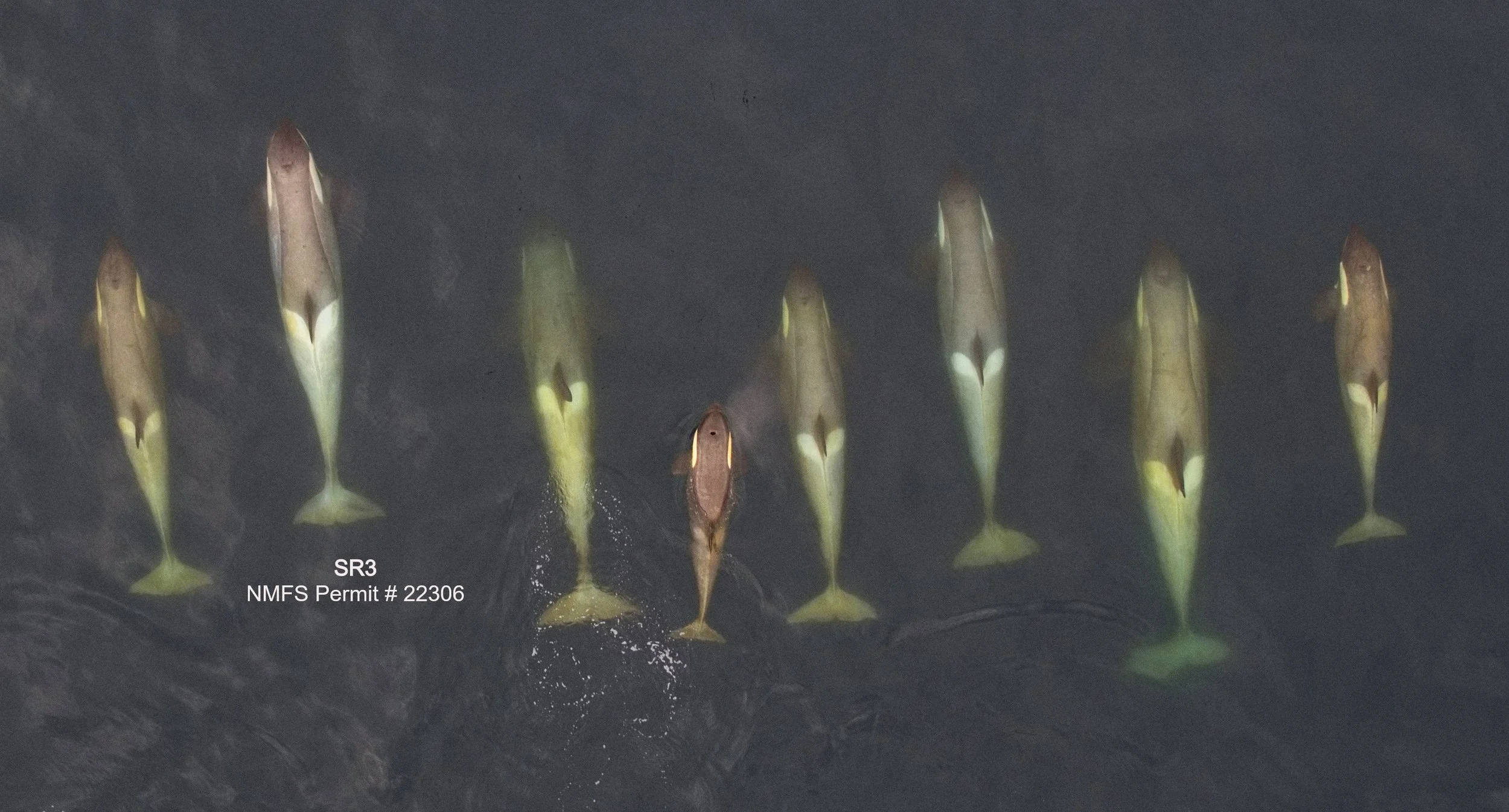
Aerial image Type B2 killer whales encountered around the Antarctic Peninsula in February 2026. The SR3 team collects photogrammetry images like these to estimate the size and assess the body condition of killer whales in this rapidly warming ecosystem. Aerial images were collected non-invasively using a small remotely-controlled hexacopter drone flown from a zodiac launched from the M/V National Geographic Explorer. Research was conducted under NMFS Permit # 22306 and Antarctic Conservation Act Permits ACA 20220-010.
The SR3 team (Dr. Holly Fearnbach, Jessica Farrer and Sadie Youngstrom) has had an incredibly successful start to their 2026 field effort onboard the M/V National Geographic Explorer. This project, now in its 17th year, monitors the health and status of top krill consumers (humpback and Antarctic minke whales) and top predators (killer whales) around the Antarctic Peninsula. This region is warming more rapidly than almost any other part of the world, and as such, it is imperative to understand how these changes are affecting wildlife populations in this pristine habitat. This project uses a suite of innovative research methods including: 1) using photo-identification to identify individual killer whales, estimate population abundance and monitor changes over time, 2) using drones to non-invasively collect aerial photogrammetry images to assess body condition (reproductive and nutritional) and monitor changes in condition over time, 3) using drones to collect blow/breath samples to assess respiratory health and relate respiratory health to body condition, and 4) using drones to identify defecation events and collect free-floating fecal sample collection to assess gut health, which will also be related to body condition. Data collected this season will be incorporated into our long-term datasets on whale health and status and results will be shared with the public, scientific community, and conservation and management agencies to help inform conservation and management actions aimed at protecting the fragile ecosystem of the Antarctic Peninsula.
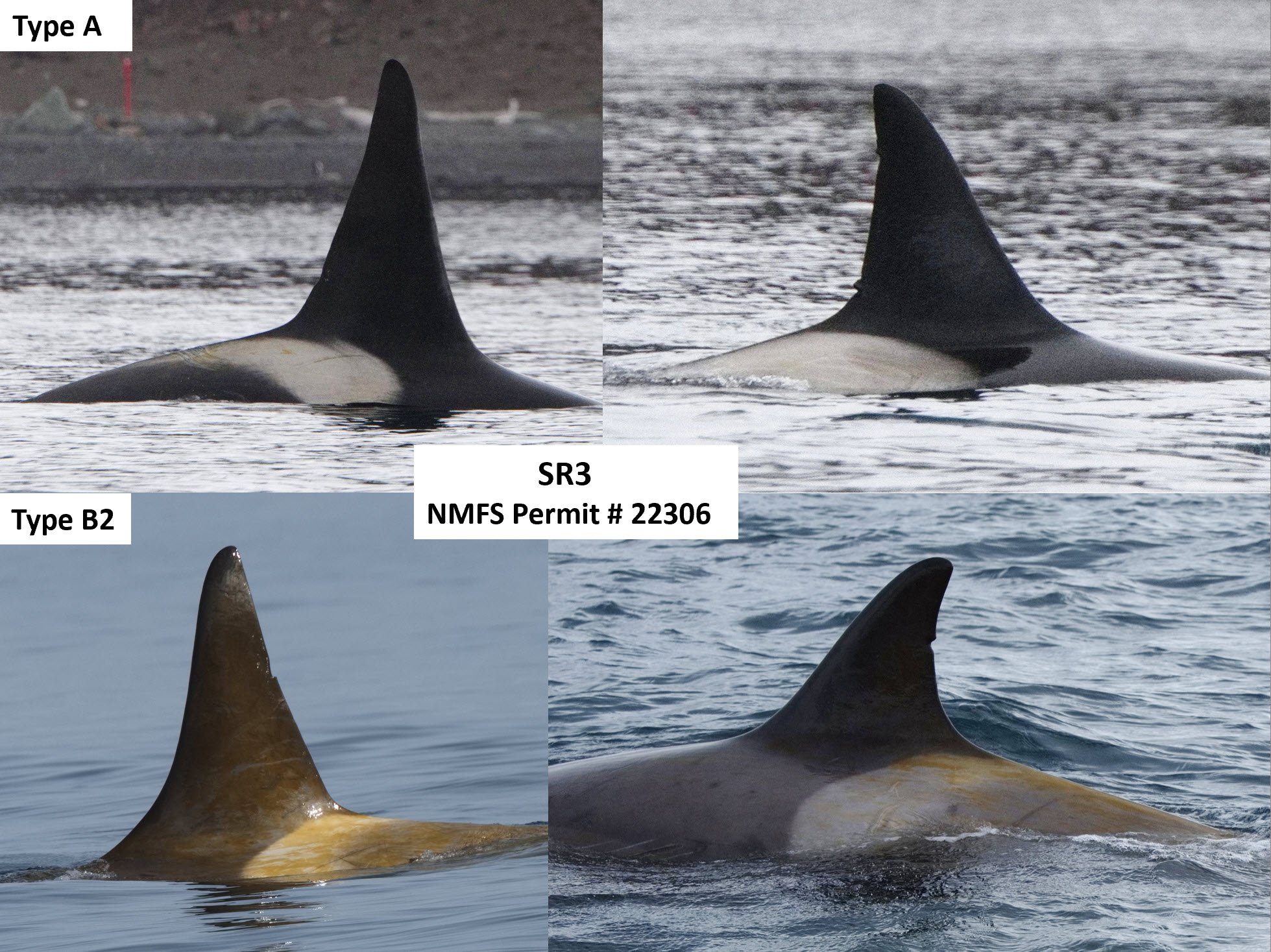
Photo-identification images of two individuals from a group of Type A killer whales encountered near Bransfield Strait (top row, first seen in 2014) and another two individuals from a group of Type B2 killer whales encountered in the Gerlache Strait (bottom row, first seen in 2012). These images will be used to identify individuals, estimate abundance using individual sighting histories, and monitor trends in abundance over time. Images were collected from a zodiac launched from the M/V National Geographic Explorer around the Antarctic Peninsula under NMFS Permit # 22306 and Antarctic Conservation Act Permits ACA 20220-010.
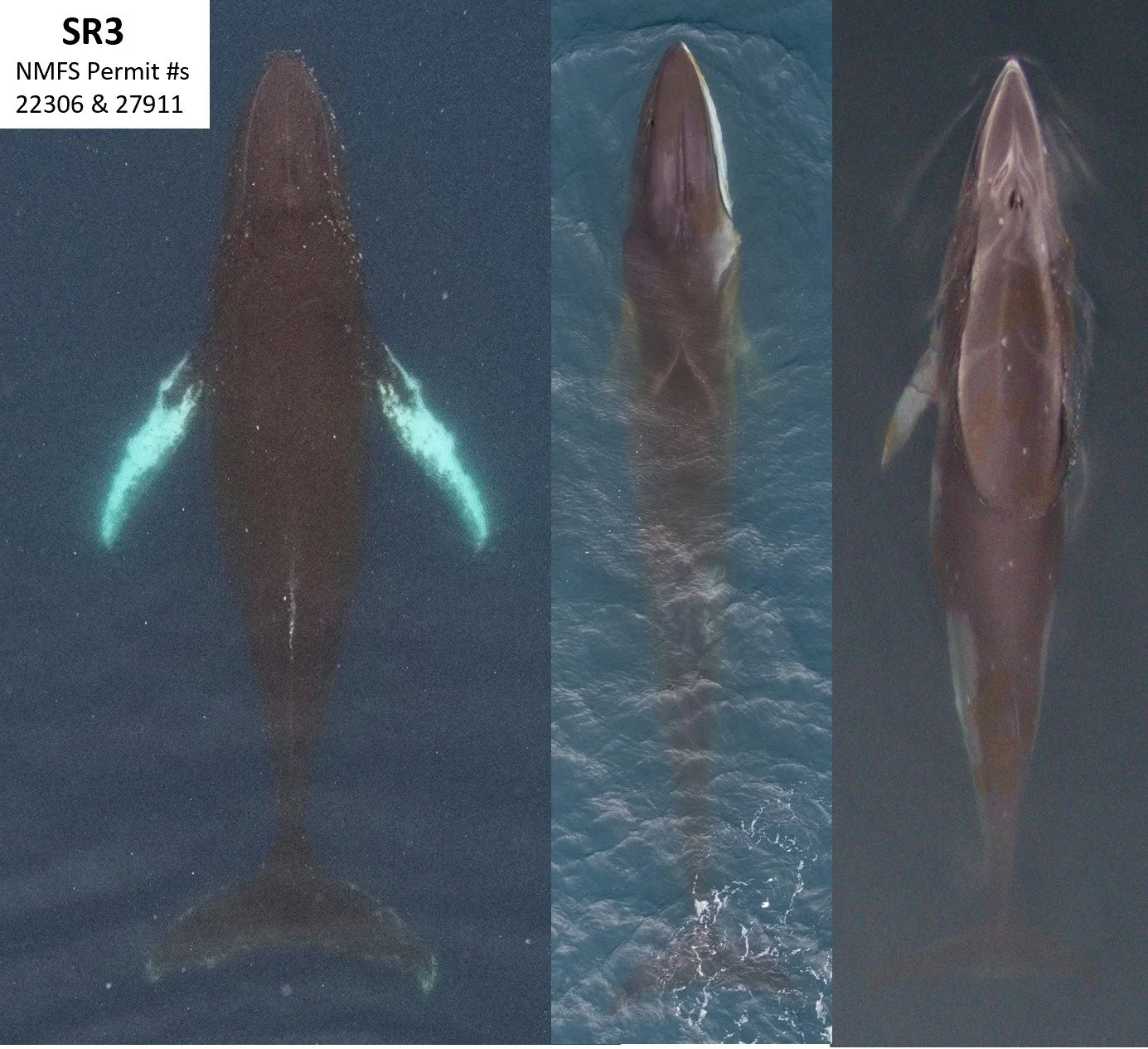
Aerial images of a humpback whale (left), fin whale (center) and Antarctic minke whale (right) encountered around the Antarctic Peninsula in February 2026. The SR3 team collects photogrammetry images like these to estimate the size and assess the body condition of top krill consumers in this rapidly warming ecosystem. Aerial images were collected non-invasively using a small remotely-controlled hexacopter drone flown from a zodiac launched from the M/V National Geographic Explorer. Research was conducted under NMFS Permit #s 22306 & 27911 and Antarctic Conservation Act Permits ACA 20220-010 & 2025-019.
So far this season the team has been able to conduct 68 photogrammetry flights (17,395 images) over 21 humpback whales, ~40 Type B2 killer whales, 7 Type A killer whales, 1 Antarctic minke whale and 3 fin whales (first aerial images of fin whales collected by the project). They have also collected more than 2000 photo-identification images of all species encountered, one humpback whale blow sample and one humpback whale fecal sample. The season has already been a tremendous success!
This project has been extremely fortunate to have long-term support from the Lindblad Expeditions- National Geographic Fund (LEX-NG Fund) and the National Geographic-Lindblad Expeditions Visiting Scientist Program. Research was conducted under NMFS Permits # 22306 & 27911 and Antarctic Conservation Act Permits ACA 20220-010 and 2025-019.