
By Holly Fearnbach, Marine Mammal Research Director
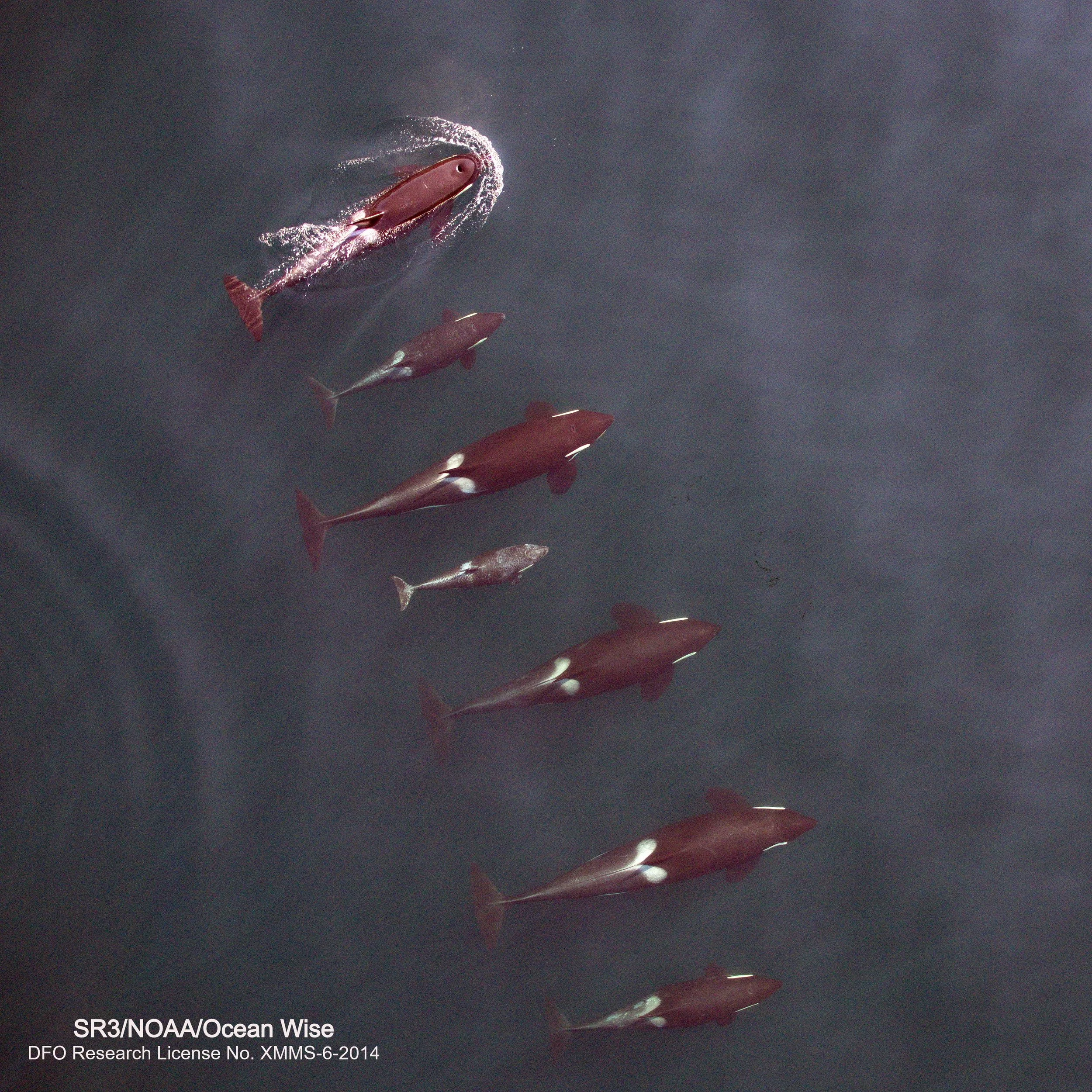
Aerial image of the I16 matriline from the Northern Resident killer whale population. Image was obtained non-invasively using a remotely operated hexacopter drone flown > 100 ft above the whales under DFO license no. XMMS-6-2014.
A new publication featuring SR3’s non-invasive photogrammetry research on killer whales was published this week in the journal Scientific Reports (read the paper here). The paper, titled Costs of maternal care revealed through body condition in Northern Resident killer whales (Orcinus orca), is part of a collaborative study between SR3, Raincoast Conservation Foundation, the University of Victoria, New England Aquarium, Ocean Wise and Simon Fraser University. Aerial photogrammetry images were collected non-invasively from Northern Resident killer whales off Vancouver Island and the central coast, British Columbia between 2014-2023. These images were analyzed to evaluate energetic costs associated with reproduction and subsequent maternal care in the fish-eating Northern Resident killer whale population. The study, led by Sharon Kay as part of her MSc at the University of Victoria, found that Northern Resident killer whale mothers incur physiological costs from reproduction and lactation, as well as from the lifelong provisioning of non-dispersing offspring. Additionally, declines in body condition were correlated with increasing numbers of dependent offspring and lifetime births. Results from this study support trends in body condition previously documented for reproductive females in the endangered population of Southern Resident killer whales, providing important insights into the energetic demands of long-term parental investment for these two sympatric populations. Management actions aimed at killer whale recovery in both the U.S. and Canada should consider these additional costs for reproductive females when making recommendations aimed at ensuring these populations have access to an adequate supply of their primary prey, Chinook salmon, throughout the year.