
Another Seal Lost from Human Violence
By Kate Hruby, Communication and Education Coordinator
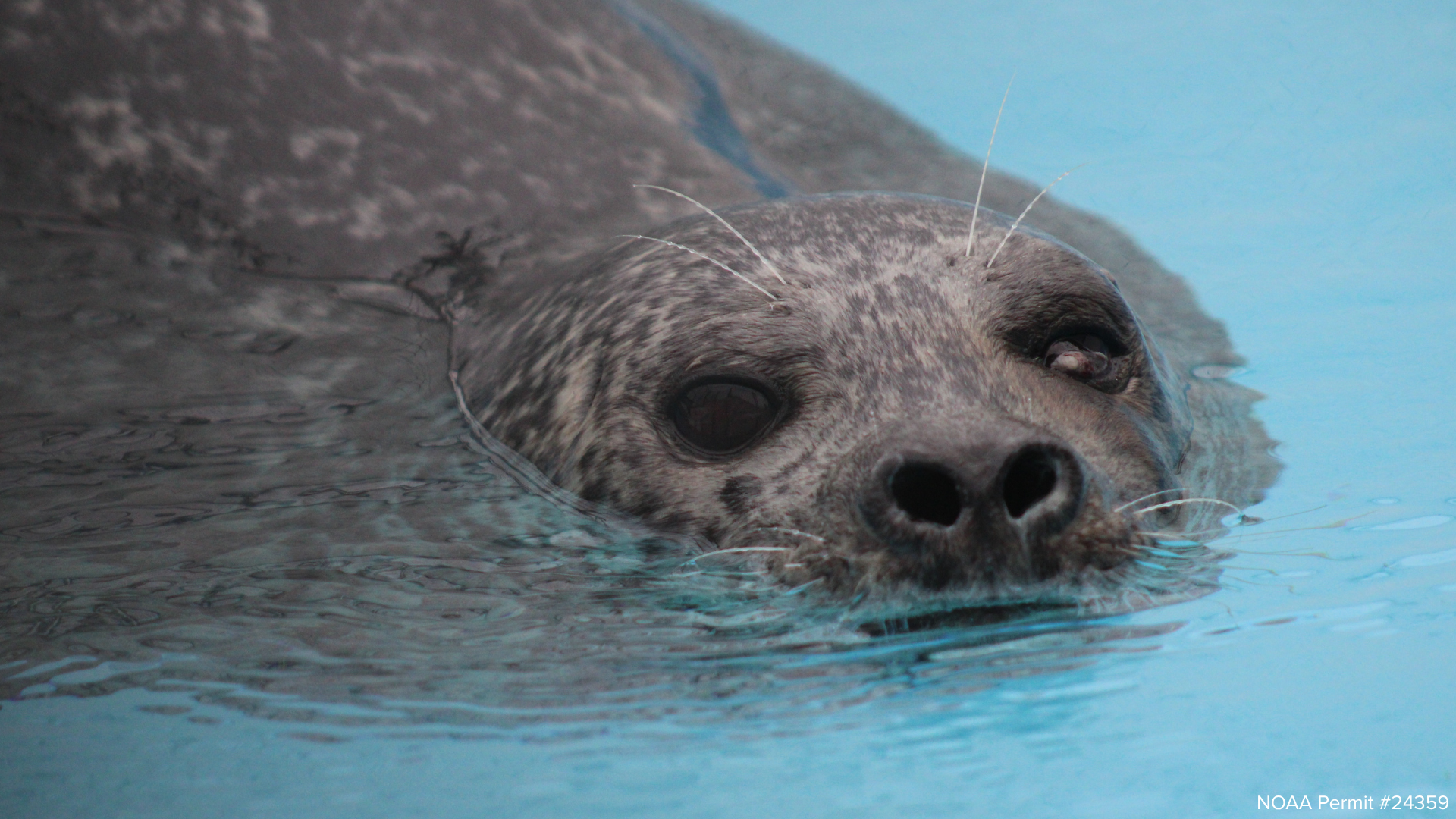
The adult harbor seal who was shot and brought to SR3 for care.
Content Warning: gun violence, animal death, surgical procedures
Eggs Benedict, or “Benny,” was a harbor seal who came into care in February. She had been shot. We provided months of critical care, food, and medical interventions to give her a second chance, but unfortunately she passed away last week. This is her story.
Her Rescue
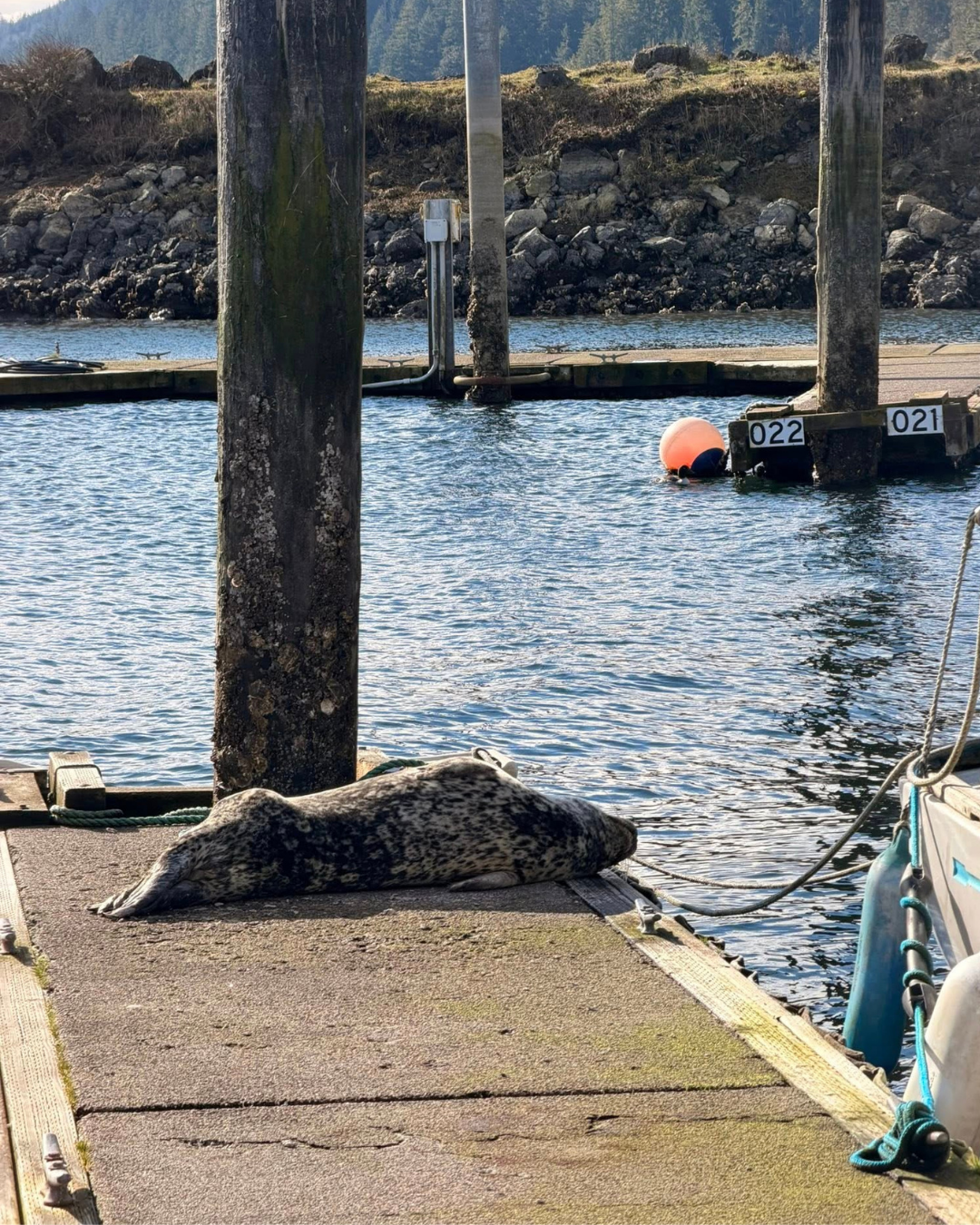
An initial photo from Benny’s response. Credit: Center Valley Animal Rescue.
On February 19th, an adult harbor seal was observed by our Stranding Network Partner, Center Valley Animal Rescue, on a dock in Hood Canal. She was lethargic and extremely underweight, with a nasal infection and injured eye. She was transported to SR3 for further evaluation and care.
Initial Exams
Upon arrival, she was given treatment to address her malnourishment, along with time to rest. The next morning during a full exam, x-ray imaging revealed that her face wounds were caused by a projectile. One might assume this meant debilitating trauma, but Benny was alert and getting in and out of her pool. A big part of marine mammal medicine is monitoring behavior, so while her outcome was still unknown, we cautiously moved forward based on her attitude. Knowing we needed more answers about her health and likelihood of recovery, we planned her continued care to include further diagnostics along with antibiotics and pain medication.
A Deeper Look
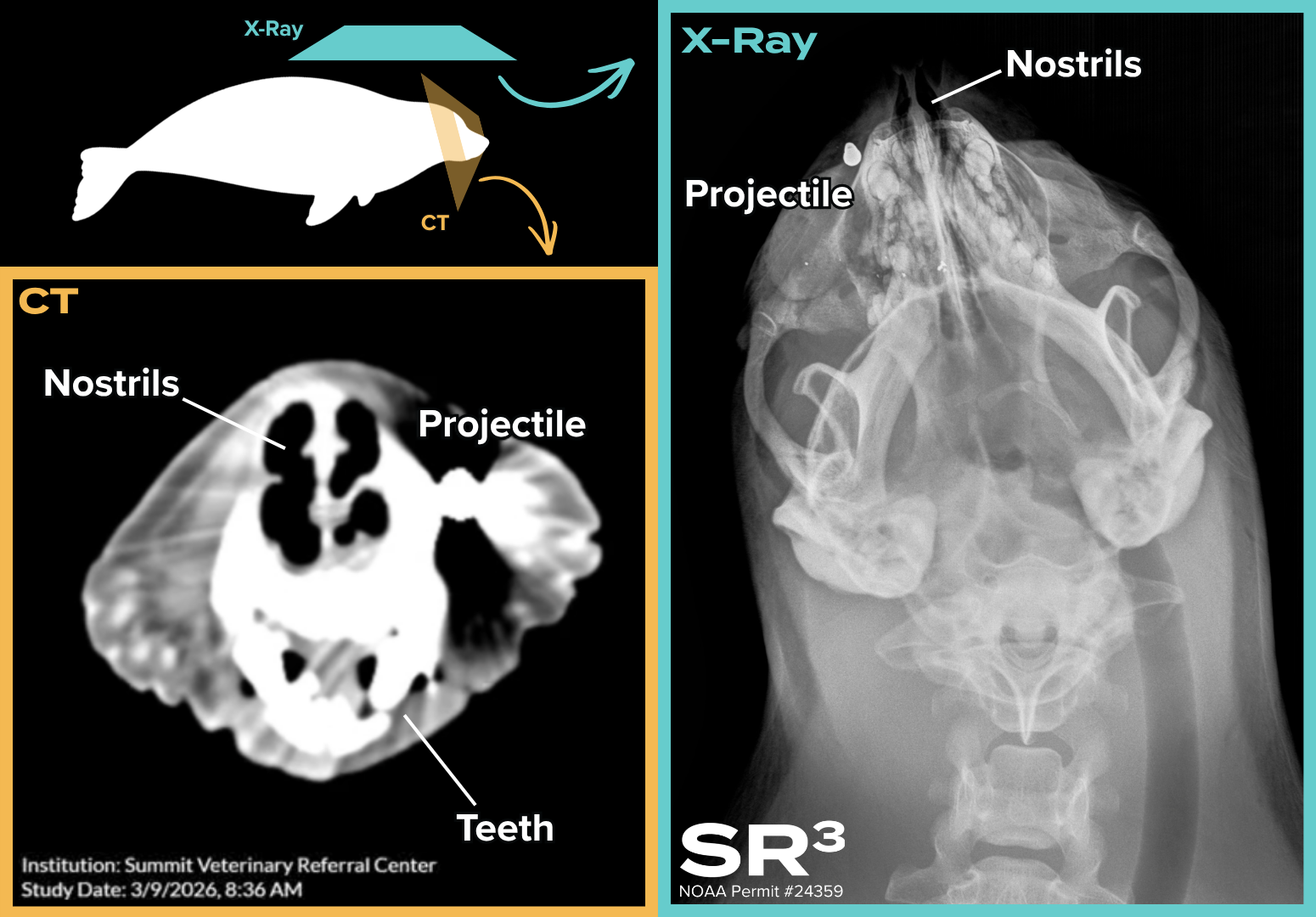
A look inside Benny’s head, from above through x-ray imaging, and perpendicular to her nose through a CT scan.
To further evaluate patients with head trauma, we partner with our colleagues at Summit Veterinary Referral Center to access advanced CT imaging. With this unique look inside her skull, we confirmed trauma to her nose, but thankfully didn’t find any injuries that appeared immediately life threatening. Bone injuries take time to heal, so we brought her back to the Rescue Center to continue her medical care.
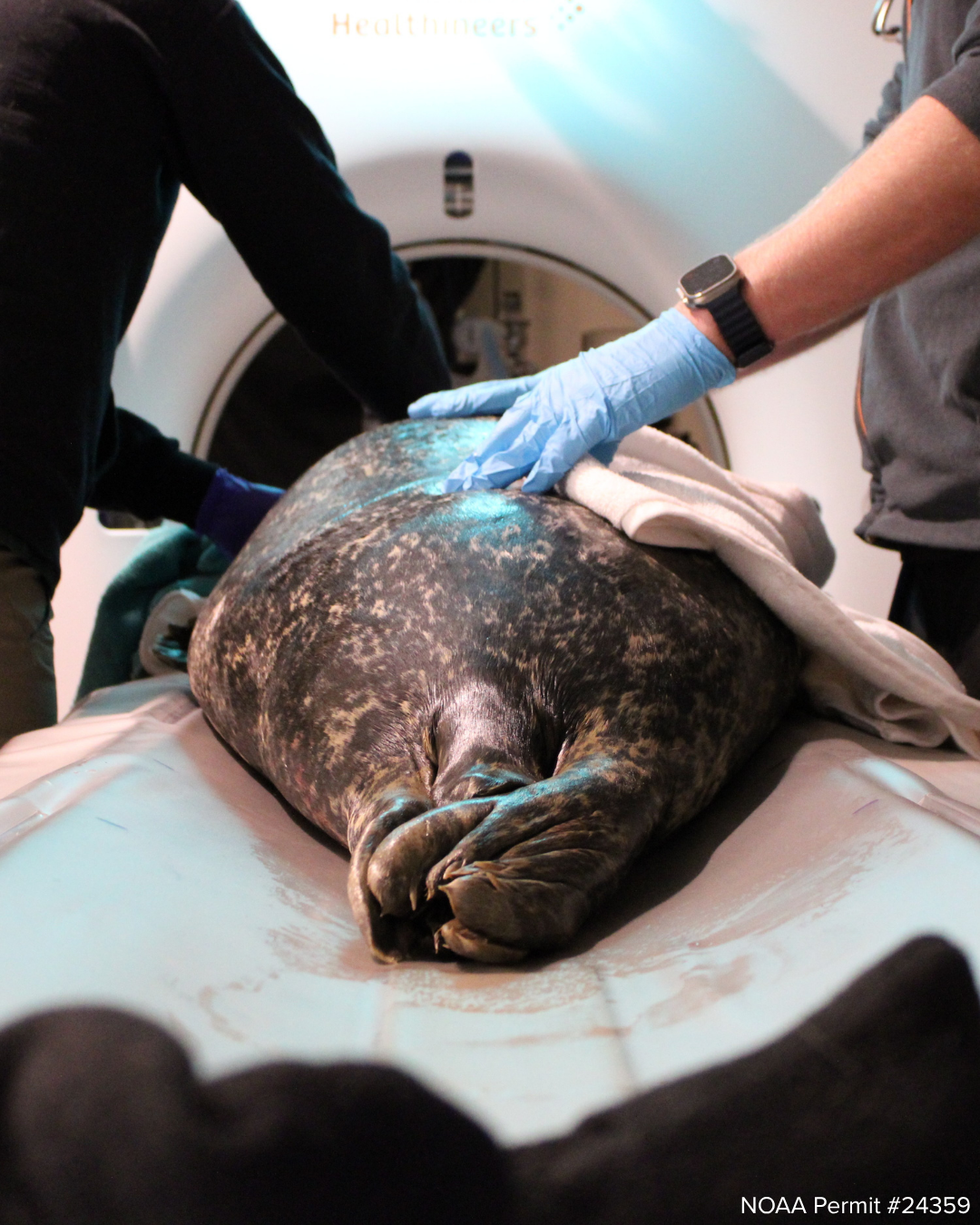
Benny during her second CT scan at Summit Veterinary Referral Center.
Six weeks later, we returned to Summit for a second CT scan to check her progress. Her nose trauma was stable, and we got the good news that her eye injury was healing as well. All signs were pointing to continued recovery.
The Final Two Weeks
Unfortunately, a week after her second CT scan, Benny’s appetite began to decline and the next several days were marked by ups and downs. One day she would perk up on the side of the pool, the next she would be lethargic. To ensure she was getting the nutrition and hydration she needed, we gave her fluids subcutaneously (under the skin) and pureed fish that was fed to her through a tube. “We were tube feeding her to support her through this difficult phase of healing,” explains our veterinarian, Dr. Christine Parker-Graham. “We hoped that she would be able to regenerate enough of the damaged bone to remain fully functional.”
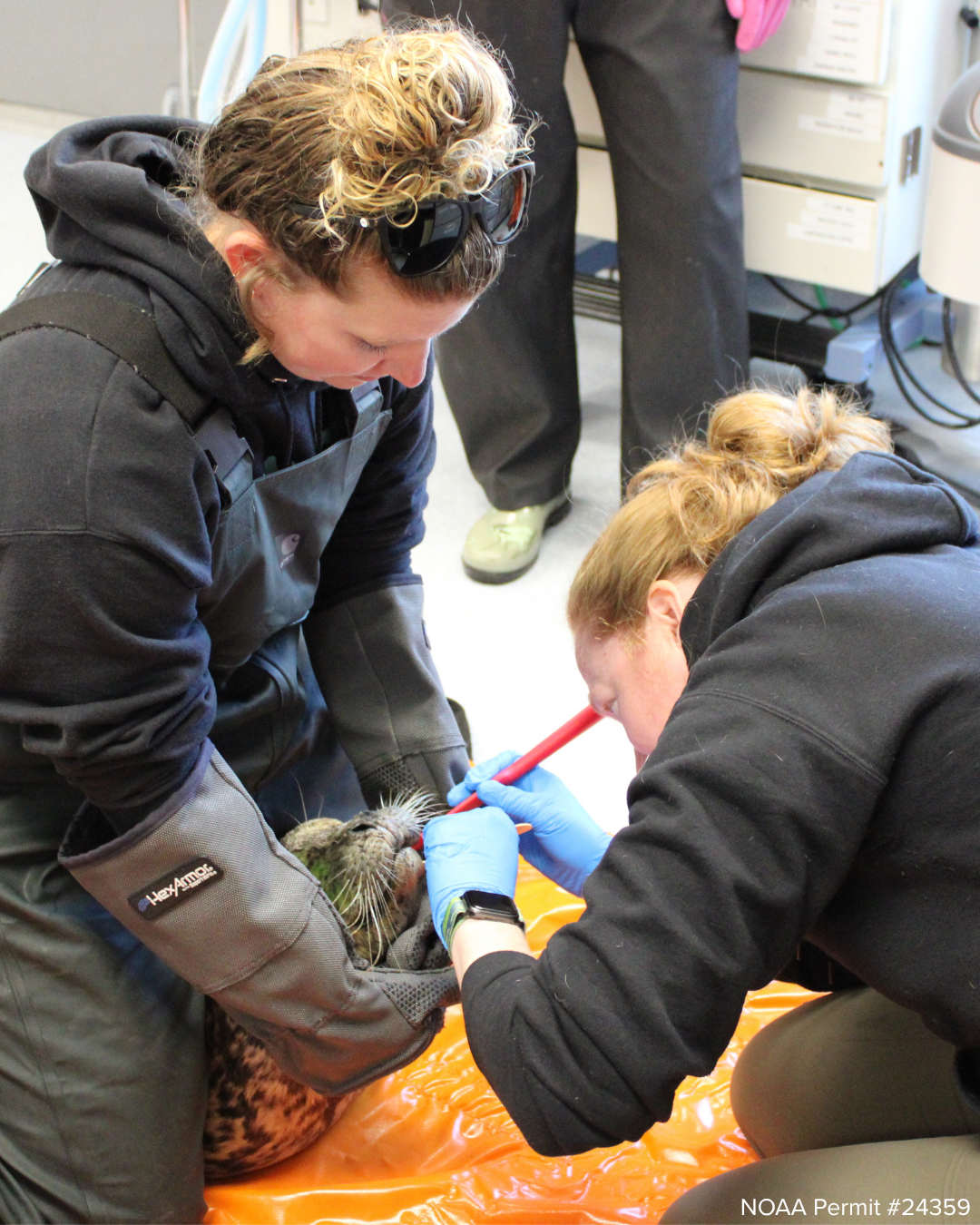
Dr. Christine checks on Benny’s teeth during her final exam.
On May 22nd, Dr. Christine collected another set of x-ray images, which showed a large abscess under her molars. This condition was not visible prior to this exam, and would explain her recent declining appetite and fluctuating behavior. We began planning a surgery to remove the problematic tooth. Her behavior over the next several hours was normal. Until suddenly it wasn’t.
She died quickly; a check prior showed her alert and responding to enrichment. Twenty minutes later, she had passed away.
The next day, our pathologist, Dr. Meg Baker, conducted a necropsy (animal autopsy) on Benny. She found that, while Benny’s fractures were healing, the surrounding tissue was still infected despite the antibiotics she was getting and her bloodwork that didn’t indicate an active infection. The bone remodeling in her left cheek wasn’t as healthy as diagnostics indicated either. “The most significant finding included a severe sinus infection with surrounding affected bone,” Dr. Meg described after the necropsy. The projectile was collected and will be transferred to NOAA law enforcement.
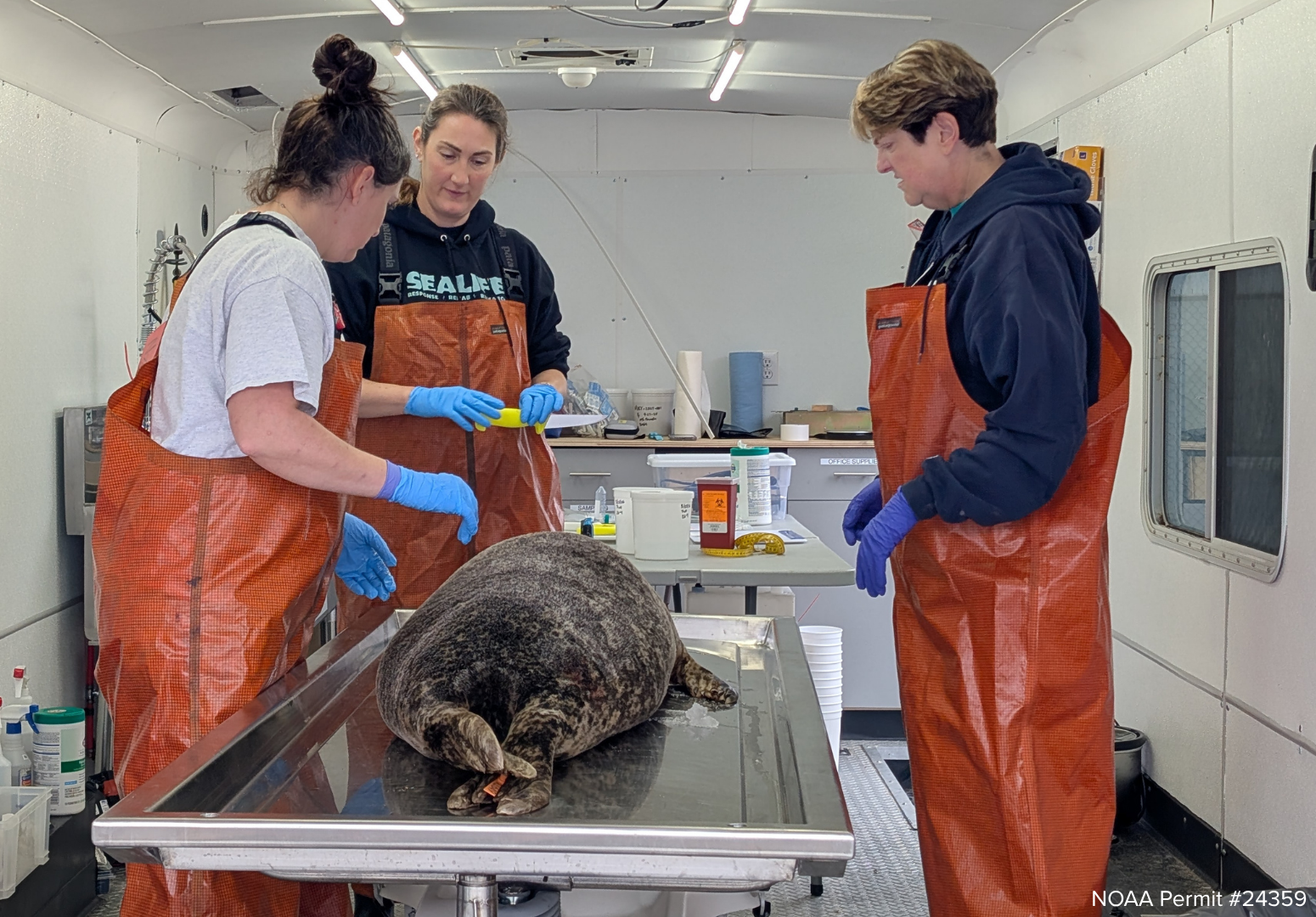
Dr. Meg (left) prepares to necropsy Benny with the help of two volunteers.
Marine mammals are incredibly skilled at hiding their weaknesses, even if those weaknesses are from something as traumatic as a loaded weapon. Her behavior over the past few months matched the expected ups and downs of the healing process, but sadly, she ultimately succumbed to her injuries. While these cases can be extremely tough, we will continue fighting for animals like her to get a second chance - especially when their injuries are caused directly by humans.
What This Means
Benny is not the first patient we’ve treated with similar wounds. Last fall, we had a similar case in a juvenile harbor seal who came into care with projectiles in his skull and rear flippers. We also perform necropsies each year on deceased sea lions who wash ashore, and find that their cause of death is often from bullets, pellets, or other projectiles as well. This violence is likely due to inaccurate information that these animals are eating all of the salmon in the area. Seals and sea lions eat over sixty species of sea creatures, yet they are scapegoated for the decline of salmon, an issue far more accurately tied to complex causes such as habitat destruction, overfishing, toxins, and warming rivers.
Benny’s life will not be forgotten. Violent stories like this continue to illustrate humans’ impact on our oceans in a way that can feel more tangible than indirect threats such as disease and climate change. While we wish Benny was not harmed in the first place, we will ensure that her story is used to create positive change. We may not win every battle, but we will continue working toward a future where marine mammals are no longer treated as the problem, but as neighbors deserving of peaceful coexistence.
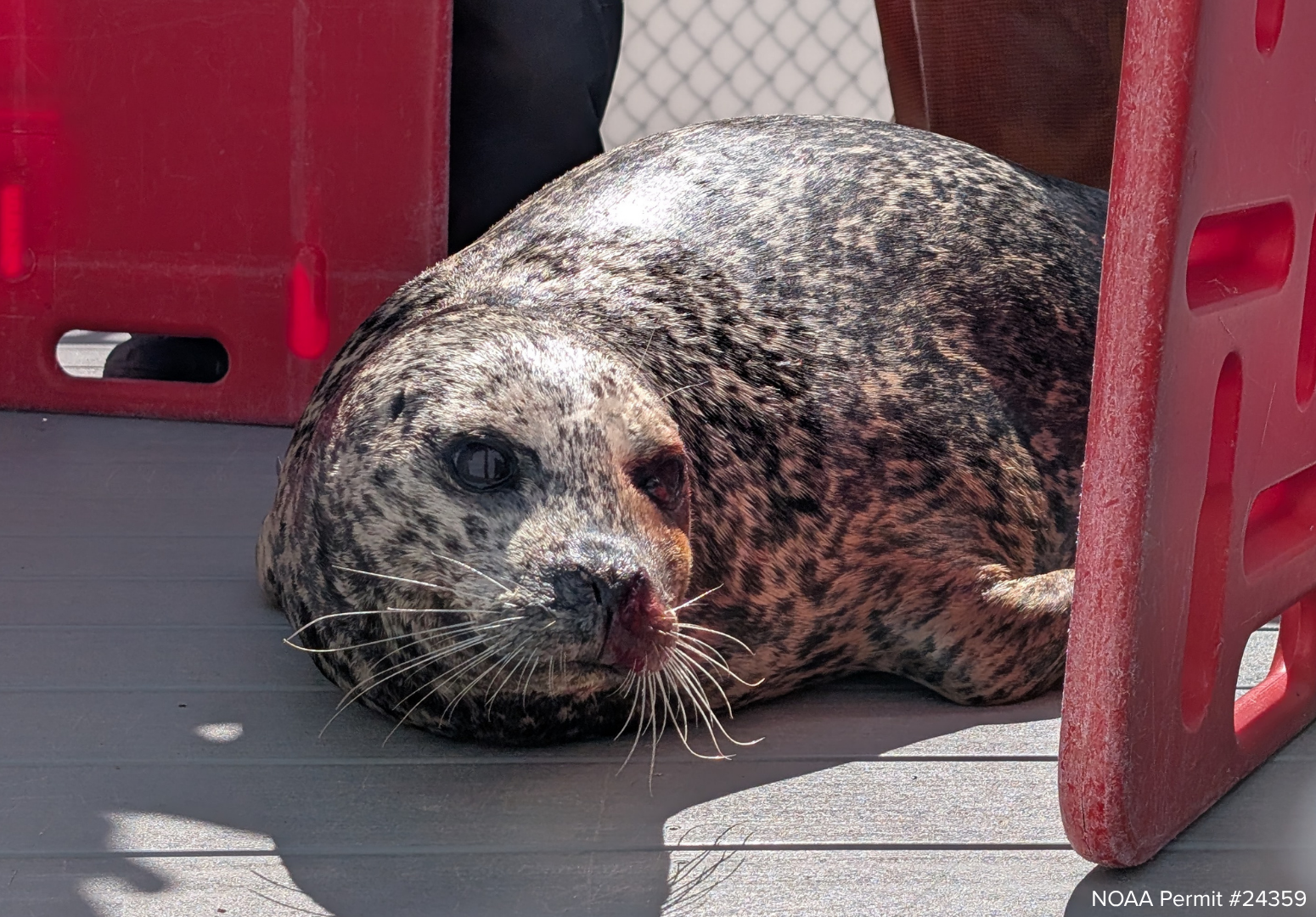
Benny resting in the sun after an exam, about six weeks into her care.
More stories about human threats to marine mammals: